
From garage conversion to fully detached accessory dwelling unit. We confirm what your specific jurisdiction actually allows before you spend a dollar on drawings — then handle design, permits, construction, and certificate of occupancy under one licensed GC contract.
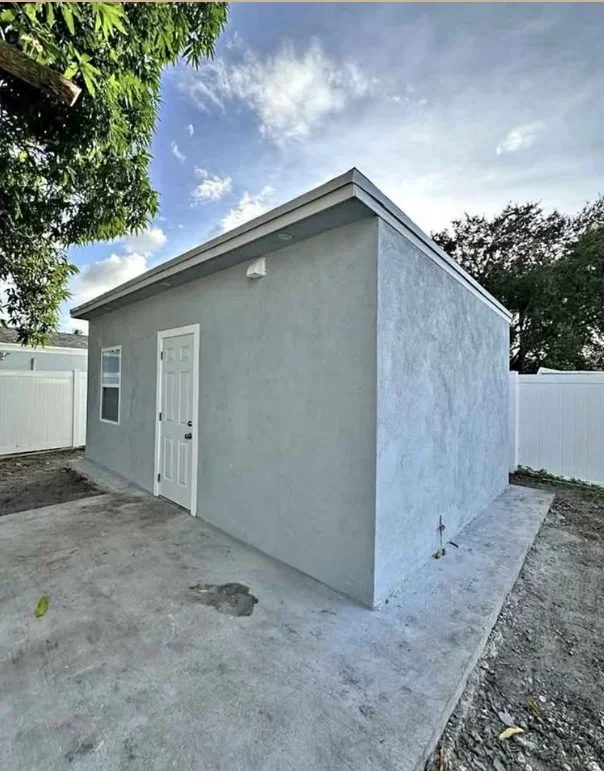
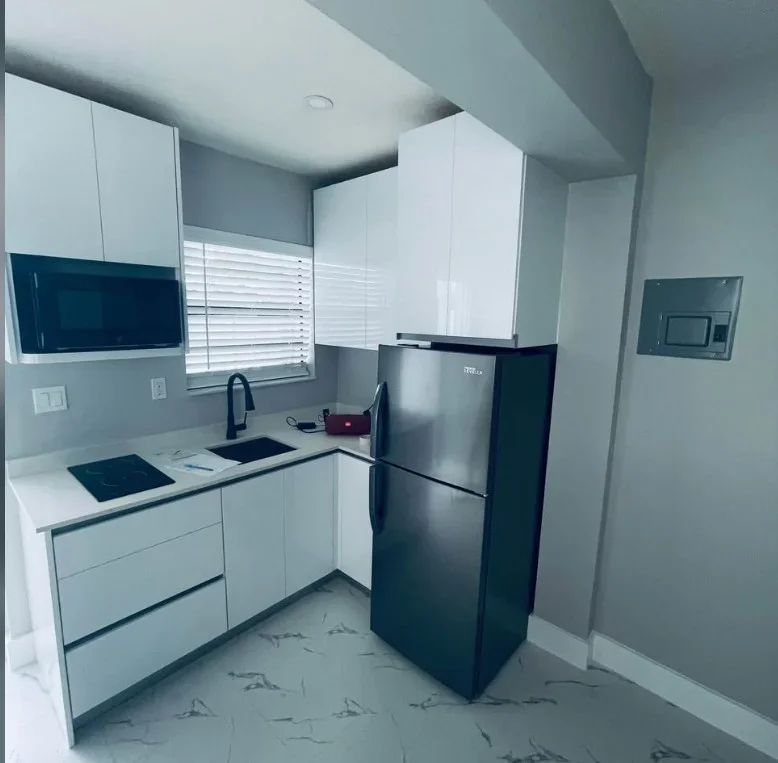
Representative example finishes for illustration — not a specific completed project.
Our ADU & Garage Conversion Work
How it works
In St. Lucie County, the first real question isn't the floor plan — it's whether your jurisdiction allows an ADU by-right, requires a variance, or needs an RM rezoning. We answer that before anything else, then manage the entire process under one contract.
We confirm whether your property sits in Port St. Lucie, Fort Pierce, St. Lucie Village, or unincorporated county — and what that jurisdiction's code actually allows for a second dwelling unit before you spend a dollar on drawings.
Architectural drawings, structural engineering, and permit submission — including a variance or rezoning application where required. We manage the back-and-forth with the correct building department. Permit fees included in written scope.
Foundation, framing, roofing, electrical, plumbing, insulation, drywall, flooring, kitchen or kitchenette, bathroom, and well/septic connection where applicable — all trades coordinated under our GC license.
Final inspections across all trades, CO issued by the correct jurisdiction. You receive a completed, legal dwelling unit with a certificate of occupancy — ready to rent or move family in.
What we build in St. Lucie County
Garage conversions are the fastest and most cost-effective ADU option in St. Lucie County. Detached ADUs on larger unincorporated lots — many on well and septic — offer more flexibility where zoning allows. We build both, and we tell you upfront which path your parcel actually supports.
Convert your existing attached or detached garage into a legal, permitted living space. We handle the floor leveling, insulation upgrade, mini-split HVAC, electrical panel sub-feed, plumbing rough-in for a kitchenette and bathroom, and CO application. Most efficient ADU path in St. Lucie County, where zoning allows.
A standalone dwelling unit built on your lot — separate from the main house. New foundation, full mechanical systems, independent utility or well/septic connections, kitchen, bathroom, and CO. Best suited to unincorporated St. Lucie County and larger Fort Pierce-area lots.
Not sure if your lot even qualifies? We review your zoning designation against your city or county's actual code — including whether a variance, special exception, or RM rezoning is realistically achievable — before anyone commits to a construction budget.
Honest pricing
ADU costs in St. Lucie County run lower than South Florida, and construction isn't subject to HVHZ product-approval rules — but jurisdiction complexity, well/septic connections in unincorporated areas, and possible variance costs change the math. These ranges include design, permits, and CO — not just construction. We quote the total project cost in writing before you commit.
Convert an attached or detached garage into a legal ADU, where zoning allows. Fastest path to a CO'd unit in St. Lucie County — existing structure, existing roof, existing footprint.
New detached ADU, 400–700 sq ft, generally on unincorporated county lots or larger Fort Pierce-area parcels. New foundation, frame or CBS construction, full mechanical systems, kitchenette or full kitchen, bathroom.
700–1,200+ sq ft detached ADU with full kitchen, 1–2 bedrooms, 1–2 bathrooms, laundry hookup, and quality finishes — well suited to larger unincorporated St. Lucie County lots.
St. Lucie County · What property owners need to know
St. Lucie County's ADU landscape is less standardized than South Florida's — and that's exactly why a feasibility-first, licensed-GC approach matters more here, not less.
Port St. Lucie's own single-family zoning code (Chapter 158, Section 158.217(C)) does not currently list a second dwelling unit among the accessory uses permitted in RE and RS-1 through RS-3 districts — accessory uses there are capped at structures like garages, workshops, and pools, limited to 20% of the principal building's footprint. A true ADU inside city limits generally needs RM zoning, a variance, or a rezoning. We check this before your first drawing, not after.
Port St. Lucie, Fort Pierce, St. Lucie Village, and unincorporated St. Lucie County each run their own zoning code and building department. A rule that applies on one side of a city line may not apply a mile away. Florida Statute §163.31771 lets local governments adopt ADU ordinances — it doesn't require them to, and each jurisdiction here has made a different call. We confirm the correct jurisdiction and its actual rule before we quote.
Much of unincorporated St. Lucie County runs on private well and septic rather than municipal utilities. An ADU on these lots needs a separate review for septic capacity and well setback distances before construction — a step municipal-utility jurisdictions like central Port St. Lucie don't require. We scope this in the feasibility review, not as a change order later.
Port St. Lucie's Neighborhood Services Code Compliance division enforces unpermitted second dwelling units with fines up to $250/day for a first violation and $500/day for a repeat violation. An unpermitted "in-law suite" also has no CO, can't legally be rented, must be disclosed at sale, and may void your homeowner's insurance. We build every ADU targeting a CO at close-out.
St. Lucie County is not in the High-Velocity Hurricane Zone that covers Miami-Dade and Broward — construction here falls under the standard Wind-Borne Debris Region, which is a different, generally less expensive approval pathway for windows, doors, and roofing. That doesn't mean lighter construction standards overall; it means a different, often faster, product-approval process that we manage so you're not paying for HVHZ-level products you don't need.
We provide architectural drawings, manage zoning review and any variance process, coordinate all trades, and deliver the CO. You have one contract and one point of contact — not a separate zoning consultant, architect, engineer, plumber, and framer you hired separately.
We bring the same feasibility-first ADU process we built across South Florida to the Treasure Coast. Here is what shapes every project here.
The most common reason an ADU project stalls in St. Lucie County isn't cost — it's discovering, after drawings are already paid for, that the property's own zoning code doesn't list a second dwelling unit as a permitted accessory use. Port St. Lucie's code does exactly that for standard single-family districts, which surprises a lot of homeowners who've heard that "Florida now allows ADUs everywhere." Florida Statute §163.31771 gives cities and counties the option to adopt an ADU ordinance — it does not require them to, and St. Lucie County's three jurisdictions have not all made the same choice. We confirm your exact zoning designation and realistic path (by-right, variance, or rezoning) in the first 1–3 weeks, before any design work begins.
Well and septic capacity is the other variable that catches homeowners off guard. A large share of unincorporated St. Lucie County runs outside municipal utility service, which means an ADU there needs its own septic capacity review and well setback confirmation — a step that simply doesn't apply inside central Port St. Lucie. We identify every fee and every jurisdictional requirement in writing before you sign, whichever of the county's jurisdictions your property sits in.
From Port St. Lucie to Fort Pierce — St. Lucie County is our Treasure Coast market, backed by 10+ years of licensed GC experience in Florida.
Verified reviews from ADU and garage conversion projects across St. Lucie County.
"We're in Port St. Lucie and had no idea our zoning didn't automatically allow a second unit. D&Co explained the variance process upfront, handled the application, and we got approved. Would have wasted months without that first conversation."
"Garage conversion near Fort Pierce. D&Co handled the drawings, the permit, and the CO. My son moved in within 4 months. The septic review on our lot was something I hadn't even thought to ask about — they caught it early."
"Our lot is unincorporated county, well and septic. Total project cost was $71,000 and it included the septic capacity review we didn't know we needed. Straightforward process from start to CO."
Common questions
The process, the cost, which jurisdiction actually allows a second unit, and what makes an ADU legal to rent in St. Lucie County.
Not automatically. Port St. Lucie's own single-family zoning code (Chapter 158) does not currently list a second dwelling unit among the accessory uses permitted in RE and RS-1 through RS-3 districts. A true ADU there generally requires multi-family (RM) zoning, a variance, or a rezoning — it is not a simple by-right permit the way it is in some other Florida cities. Unincorporated St. Lucie County and the City of Fort Pierce have their own, separate zoning rules. We confirm your exact jurisdiction and zoning designation before quoting — this single fact changes the entire project path.
ADU cost in St. Lucie County ranges from $35,000 for a basic garage conversion to $160,000+ for a custom detached unit with 2 bedrooms and premium finishes. Our pricing includes design, zoning/variance review, permits, construction, and CO — not just construction labor. The most common detached ADU project (400–700 sq ft) runs $55,000–$95,000 all-in.
No. St. Lucie County is not in Florida's High-Velocity Hurricane Zone (HVHZ) — that designation applies only to Miami-Dade and Broward counties. St. Lucie falls under the standard Florida Building Code Wind-Borne Debris Region, which generally requires impact-rated protection for openings but does not require the full Miami-Dade Notice of Acceptance (NOA) product-approval system. Construction still must meet Florida Building Code wind standards for the Treasure Coast, just under a different, less restrictive approval pathway than HVHZ counties.
Unpermitted second dwelling units are enforced by Port St. Lucie's Neighborhood Services Code Compliance division, with fines up to $250 per day for a first violation and $500 per day for a repeat violation. Beyond the fines, an unpermitted unit has no certificate of occupancy, can't legally be rented, must be disclosed at sale, and may void your homeowner's insurance. We only build to a CO.
Only if it has a certificate of occupancy as a dwelling unit, and only where the zoning/jurisdiction allows it. We confirm feasibility in writing — including whether your property needs a variance or RM rezoning — before any construction begins, so you're not finishing a space that can't legally become a rentable unit.
ADU projects in St. Lucie County typically include: impact fees ($4,000–$10,000 for new construction, generally lower than South Florida counties), utility or well/septic connection fees ($2,500–$10,000, higher for unincorporated properties on well and septic), permit fees ($900–$2,500), and architectural drawings and engineering ($4,500–$13,000). Where a variance or rezoning is required, we add that process and its timeline to the written scope up front.
Yes. D&Co holds Florida Certified General Contractor license CGC1531095, which authorizes all phases of residential and commercial construction including ADU design-build projects. Dariceli Kunhardt has 10+ years in construction, development, and project management. All work is fully permitted and inspected under our GC license. Verify at the Florida DBPR website.
Ready to explore?
Tell us your lot, your goals, and your timeline. We'll confirm your exact jurisdiction and zoning path and give you an honest picture of what's buildable before you commit to anything.
Prefer email? office@dandcohomes.com
More from D&Co — St. Lucie County