
Whether it's a garage conversion or a new detached accessory dwelling unit, we take it from first sketch to CO. We confirm what your specific jurisdiction actually allows before you spend a dollar on drawings — then handle design, permits, construction, and certificate of occupancy under one licensed GC contract.
Free ADU Consultation
Just your name and number — we'll call you back, usually within 24 hours.
No spam. We respond fast.
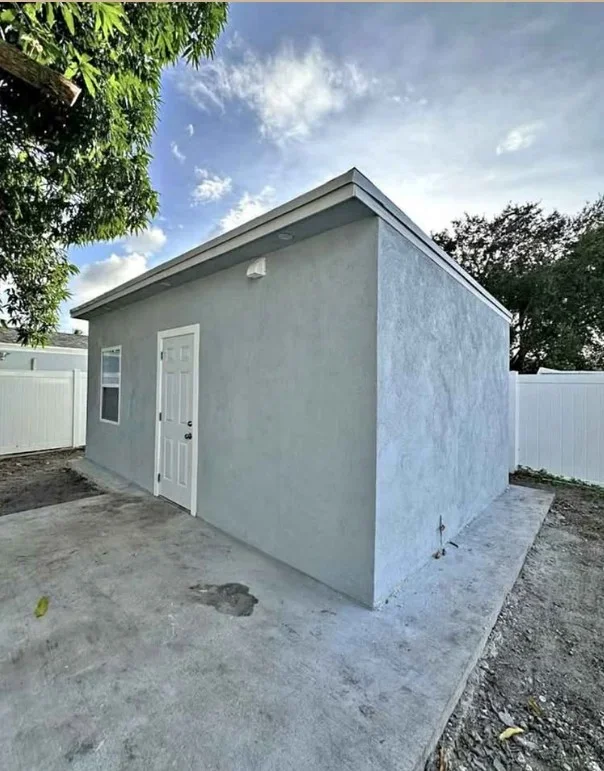
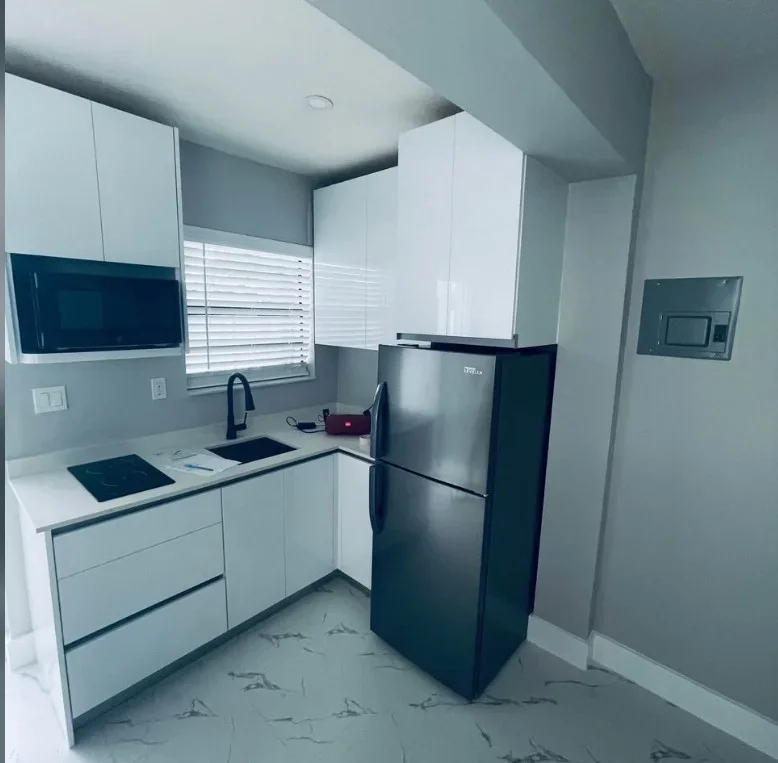
Representative example finishes for illustration — not a specific completed project.
Our ADU & Garage Conversion Work
How it works
In Fort Pierce and the surrounding county, the opening question is regulatory rather than architectural: is a second unit permitted on your parcel, or does it need a variance or RM rezoning? We settle that first and then run the whole job under a single agreement.
We start by identifying whether your parcel falls under Fort Pierce, Port St. Lucie, St. Lucie Village, or the unincorporated county, then read that jurisdiction's actual rules on second units so you aren't paying for drawings that can't be approved.
Our team produces the plans and structural engineering, submits the application, and files any variance or rezoning paperwork that applies. Corrections and resubmittals with the building department are ours to manage, and permit fees sit inside the written scope.
The build covers foundation and framing, roofing, electrical and plumbing, insulation, drywall, flooring, the kitchen or kitchenette, the bathroom, and well or septic tie-ins when needed. We coordinate all of it under our general contractor license.
Inspections wrap up trade by trade, then the correct building authority issues the certificate of occupancy. You take possession of a legal, finished unit that is ready to rent or to house family.
The ADUs we build in St. Lucie County
In St. Lucie County, a garage conversion is usually the quickest and least expensive way to add a legal dwelling. A detached unit on a larger lot gives you more space and more rental potential. We build both.
We turn an existing attached or detached garage into permitted living space: leveled floor, upgraded insulation, mini-split cooling, a sub-panel, plumbing for a kitchenette and bathroom, and the CO application. Often the most efficient ADU route in St. Lucie County.
A separate dwelling on your lot with its own foundation, mechanical systems, utility connections, kitchen, and bath, finished with a certificate of occupancy. A strong choice if you want rental income or an independent home for family.
Not certain your property can have an ADU? We check its zoning against the current local code, including how realistic a variance, special exception, or RM rezoning would be, ahead of any construction budget.
Honest pricing
Treasure Coast ADUs usually price below South Florida builds, since HVHZ product rules don't apply. The swing factors are jurisdiction, private well and septic in unincorporated areas, and variance costs. Every range here includes design, permits, and the CO, and you get a written total before signing.
Where zoning allows, an attached or detached garage becomes a legal ADU. With the shell, roof, and footprint in place, it is the fastest way to a certificate of occupancy around here.
A freestanding 400–700 sq ft ADU, most often on unincorporated lots or larger Fort Pierce-area parcels. You get a new slab and structure (frame or CBS), full mechanical systems, kitchen or kitchenette, and a full bath.
Detached, 700–1,200+ sq ft, with a full kitchen, 1–2 bedrooms, 1–2 baths, laundry connections, and upgraded finishes. Best suited to roomy unincorporated lots in the county.
St. Lucie County · What to know before you build
Unlike South Florida, St. Lucie County has no uniform ADU playbook. That inconsistency is the reason a feasibility-first process under a licensed GC pays off.
The City of Fort Pierce operates its own zoning code and building department, separate from both unincorporated St. Lucie County and Port St. Lucie. Fort Pierce's code (Chapter 125) defines a dwelling unit as a separate, independent housekeeping establishment with its own sleeping, sanitary, and kitchen facilities — a distinction that determines whether a converted space legally counts as a second unit. We confirm your parcel's zoning district and the city's specific standards before any design work begins.
Fort Pierce's Planning and Zoning Department reviews ADU and dwelling-rental applications independently from St. Lucie County — a rule that applies in unincorporated county areas or Port St. Lucie may not apply inside Fort Pierce city limits. Florida Statute §163.31771 lets local governments adopt ADU ordinances — it doesn't require them to. We confirm the correct jurisdiction and Fort Pierce's actual rule before we quote.
Fort Pierce's historic downtown and river district carry distinct neighborhood character and, in some cases, additional design considerations beyond standard residential zoning. A garage conversion or detached ADU near the river district may face different design expectations than one further inland. We confirm your parcel's specific requirements before any design work begins.
In Port St. Lucie, Code Compliance can fine an unpermitted second unit as much as $250 per day initially and $500 per day for repeat violations. Beyond fines, an unpermitted "in-law suite" has no CO, can't be leased, has to be disclosed at sale, and risks your homeowner's policy. We build toward a CO on every ADU.
St. Lucie County is not in the High-Velocity Hurricane Zone that covers Miami-Dade and Broward — construction here falls under the standard Wind-Borne Debris Region, which is a different, generally less expensive approval pathway for windows, doors, and roofing. That doesn't mean lighter construction standards overall; it means a different, often faster, product-approval process that we manage so you're not paying for HVHZ-level products you don't need.
Drawings, zoning review, variance work, trade coordination, and the CO all come from us. That means a single contract and a single point of contact rather than a patchwork of consultants and subs you manage yourself.
We bring the same feasibility-first ADU process we built across South Florida to Fort Pierce's city code. Here is what shapes every project in this city.
Fort Pierce's biggest trap isn't the building code — it's confirming which jurisdiction actually governs your parcel. Because the city runs its own zoning code separately from both unincorporated St. Lucie County and Port St. Lucie, the first question on every Fort Pierce inquiry is whether your property is inside city limits and what Chapter 125's dwelling-unit definition means for your specific project. We run that check in week one, before a single drawing is started.
From there, neighborhood character — especially near downtown and the river district — is what shapes the design. We identify every fee and every jurisdictional requirement in writing before you sign.
From downtown to the river district — Fort Pierce is part of our Treasure Coast market, backed by 10+ years of licensed GC experience in Florida.
Fort Pierce · Before you design
Fort Pierce is the county seat, with its own utility, older housing stock, and waterfront. These are the local factors we check before design starts.
Within city limits, Fort Pierce Utilities Authority (FPUA) is the utility provider, which differs from Port St. Lucie and unincorporated St. Lucie County. Connection requirements, fees, and timelines are set by the provider that serves your address, so we confirm service and capacity early.
Fort Pierce’s downtown, river district, and older neighborhoods have architectural character the city cares about. Properties in or near historic areas can face added review on exterior changes, so we check designations at the start and design the unit to fit the existing home.
Parcels near the Indian River Lagoon, canals, or low-lying streets often sit in FEMA flood zones. Flood zone status affects finished-floor elevation, foundation type, and cost, and it’s one of the first things we verify for a Fort Pierce lot.
Fort Pierce runs its own zoning code and building department, separate from unincorporated St. Lucie County. An address with a Fort Pierce mailing address can still be in the county, which changes who reviews the project and which rules apply. We confirm the jurisdiction in week one.
Common questions
How it works, what it costs, who allows a second unit, and what makes an ADU legal to rent here.
No. Fort Pierce is not in Florida's High-Velocity Hurricane Zone (HVHZ) — that designation applies only to Miami-Dade and Broward counties. St. Lucie falls under the standard Florida Building Code Wind-Borne Debris Region, which generally requires impact-rated protection for openings but does not require the full Miami-Dade Notice of Acceptance (NOA) product-approval system. Construction still must meet Florida Building Code wind standards for the Treasure Coast, just under a different, less restrictive approval pathway than HVHZ counties.
An unpermitted dwelling unit in Fort Pierce has no certificate of occupancy, can't legally be rented, must be disclosed at sale, and may void your homeowner's insurance. Fort Pierce's own building and code compliance divisions handle unpermitted-structure complaints separately from the county. We only build to a CO, so your unit is legal and insurable from day one.
Not without a dwelling-unit CO, and not where zoning forbids a second unit. We document feasibility before building starts (variance and RM rezoning included), so the space you build can actually be rented.
ADU projects in Fort Pierce typically include: impact fees ($4,000–$10,000 for new construction, generally lower than South Florida counties), utility or well/septic connection fees ($2,500–$10,000, higher for unincorporated properties on well and septic), permit fees ($900–$2,500), and architectural drawings and engineering ($4,500–$13,000). Where a variance or rezoning is required, we add that process and its timeline to the written scope up front.
Yes. D&Co is a Florida Certified General Contractor (CGC1531095), authorized for all phases of construction, ADUs included. Dariceli Kunhardt has spent 10+ years in construction, development, and project management. Everything is done to permit and passes inspection under our license. Look it up on the Florida DBPR website to verify.
Yes. The City of Fort Pierce operates its own zoning code and building department, separate from both unincorporated St. Lucie County and Port St. Lucie. Fort Pierce's code (Chapter 125) defines a dwelling unit as a separate, independent housekeeping establishment with its own sleeping, sanitary, and kitchen facilities — a definition that matters for whether a converted space counts as a true second unit. We confirm your parcel's zoning district and Fort Pierce's specific standards before quoting.
ADU cost in Fort Pierce ranges from $35,000 for a basic garage conversion to $160,000+ for a custom detached unit with 2 bedrooms and premium finishes. Our pricing includes design, zoning/variance review, permits, construction, and CO — not just construction labor. The usual detached project of 400–700 sq ft costs $55,000–$95,000 in total.
Ready to explore?
Tell us your lot, your goals, and your timeline. We'll confirm your exact jurisdiction and zoning path and give you an honest picture of what's buildable before you commit to anything.
Prefer email? office@dandcohomes.com
More from D&Co — Fort Pierce